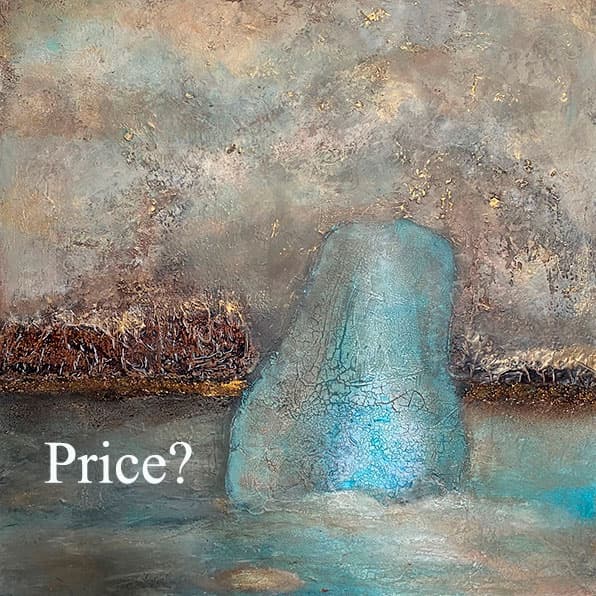
Pricing a painting can be a complex process requiring a combination of objective and subjective factors.
If you're new to the field, you can use a basic rule of thumb: height × width ÷ 2. For example, if you have a painting measuring 80 cm in height and 60 cm in width, the calculation would be as follows: 80 × 60 ÷ 2, resulting in a price of 2,400 DKK.
However, this method is not always the most accurate or fair, as it does not account for several other important factors.
Factors to Consider When Pricing a Painting
Materials Used
The materials employed in creating a painting are crucial to pricing. Artists might use a wide range of mediums, from acrylic paint on canvas to oil on wood. The quality of these materials can vary significantly, and some are more costly than others. If you use exclusive or custom-made materials, their cost should be factored into the painting's price.
Time Invested
The time spent creating a painting is another essential factor. Completing a single artwork can take hours or even days, and this time investment should be valued. A realistic hourly rate, reflecting your skills and experience, can be used to calculate the labor costs.
Artist’s Reputation
An artist’s popularity and recognition in the art world also play a significant role. Artists with established reputations and a history of successful exhibitions and sales often have the ability to charge higher prices for their work. This is because their art carries inherent value based on their reputation and demand.
Market and Economic Conditions
It's also important to consider the overall market and economic climate. Art prices can be influenced by trends and movements within the art market, so understanding how your work fits into this broader context is essential.
Achieving a Fair Price
By combining a realistic assessment of materials, time, and market conditions, you can arrive at a more equitable and competitive price for your artwork.
Also read: